Agent Experience
Monitoring & Insights


How do teams decide whether to improve an existing page or create a new one to win a citation?
- Should I update existing content or write something new for AI search?
- When does it make more sense to optimize a page than create a new one?
Scrunch recommends generally starting with existing pages because pages that AI platforms already crawl and cite are faster to improve than new ones built from scratch. Create net-new content when no existing page on your site addresses the prompt.
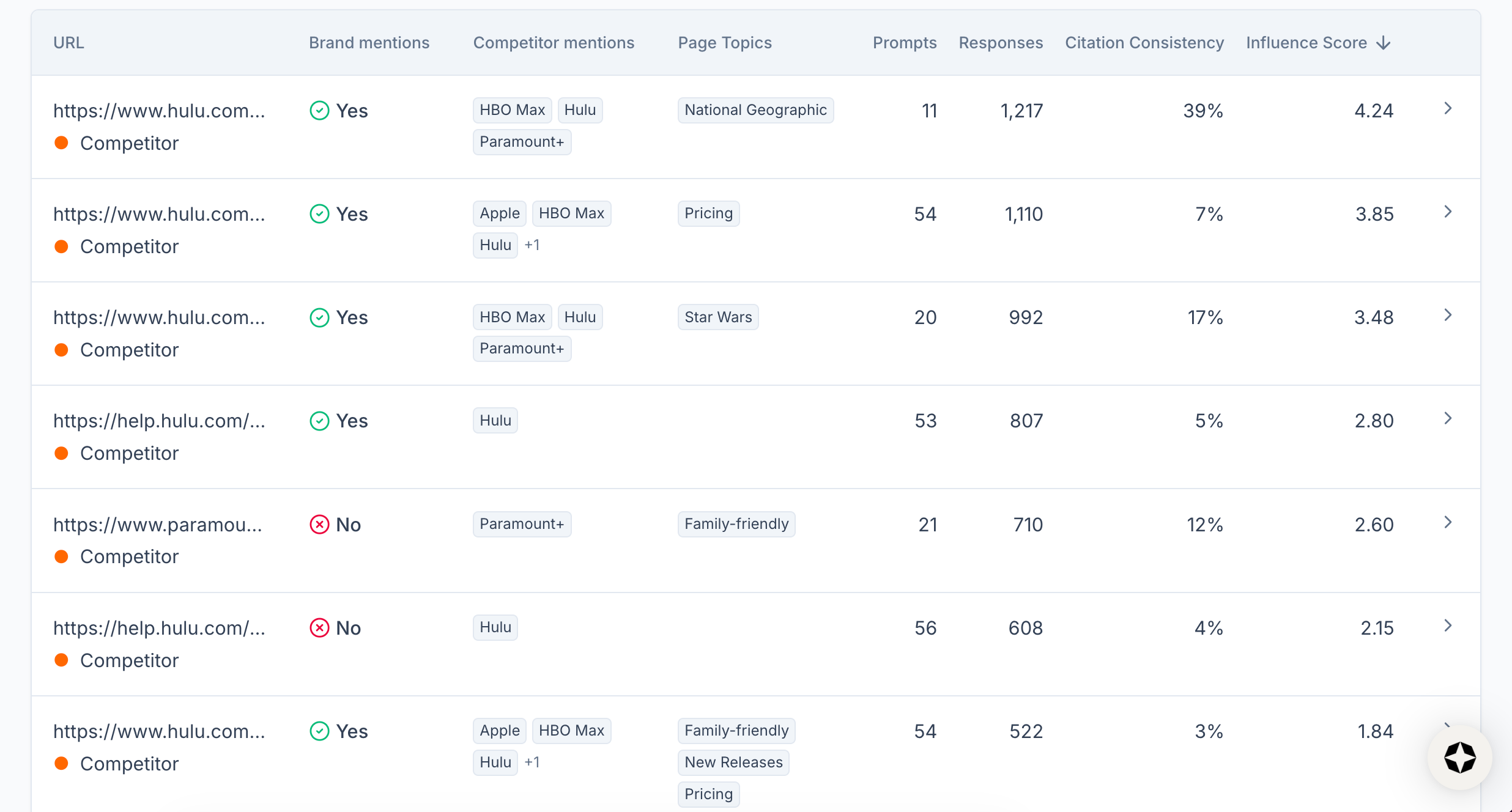
Example
For example, imagine a Scrunch user at a B2B data infrastructure company is tracking the prompt, "What's the best tool for real-time data pipelines?"
Step 1: Check which pages AI already knows about
The user opens the Site Maps tab in Scrunch and spots a product overview page with high agent traffic but low citations and a middling Audit Score. AI platforms are visiting the page but not citing it—a signal that the page needs improvement, not necessarily replacement.
Step 2: Run a page audit to diagnose the problem
The user runs a Deep AI Audit on the page in Scrunch. The audit flags content quality as the likely reason AI platforms aren't citing it. Because the page already has some authority with AI crawlers, improving it is faster than starting from scratch.
Step 3: Decide when to create something new
Reviewing the Citations tab, the user finds that one tracked prompt—"How do data pipeline tools handle schema changes?"—has no brand citations and their website has no existing page that addresses it. With no existing page to improve, the user creates a new, focused piece of content targeting that specific prompt.
Step 4: Measure the impact
After updating the product page and publishing the new piece, the user monitors changes in citation consistency in Scrunch's Citations tab to evaluate impact.
Follow-up question: How should teams evaluate which citation opportunities are worth pursuing first?
Scrunch recommends using Influence Score to evaluate which citation opportunities are worth pursuing first, then weighing impact versus effort. A high-Influence Score page with thin content or structural gaps is a stronger starting point than one that is well-built and authoritative.
If a cited source is a competitor's page, focus on improving or creating content to displace it. If it's a trusted third-party domain appearing consistently across many prompts, outreach for a placement will likely deliver faster results than competing with it directly.