Agent Experience
Monitoring & Insights

How can I see if my visibility in AI search is improving or declining over time?
- How do I track my AI search performance over time?
- Is my brand visibility in AI platforms getting better or worse?
Scrunch recommends monitoring AI search data like brand mentions and citations consistently over 2-3 week periods to identify real trends versus one-off changes.
Example
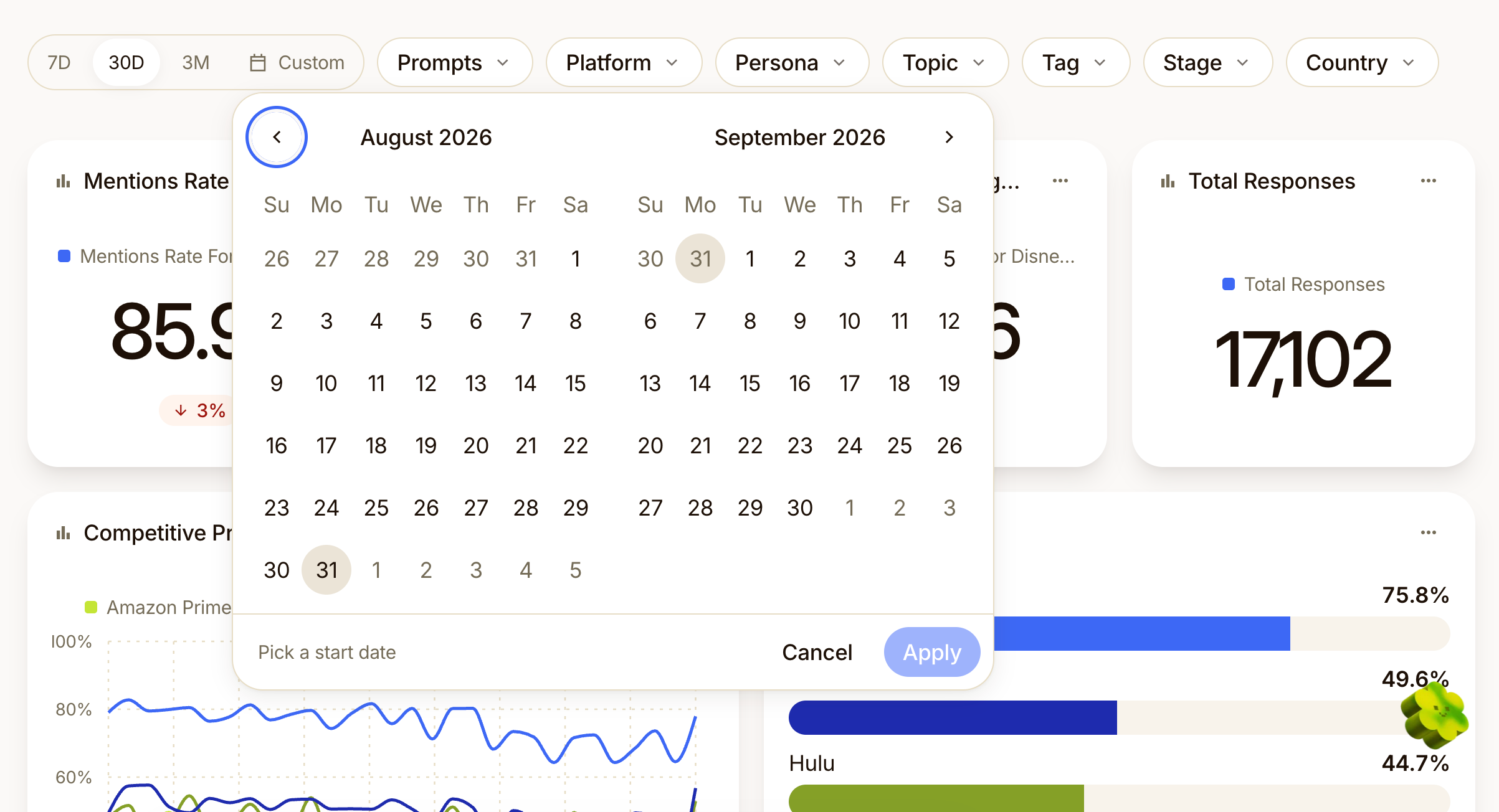
For example, imagine a Scrunch user wants to see if Q2 performance improved over Q1 for their HR software.
They’d navigate to the appropriate tab or metric in Scrunch to view AI visibility data and customize their date range to view Q2.
They could then compare this data to Q1 to see how much AI visibility improved or declined.
Additionally, they could compare their data to competitors over the same time period.
Follow-up question: What should I do if my AI search visibility is declining?
If AI search visibility is declining, Scrunch recommends:
Checking Signals and Site Diagnostics for issues
Scrunch automatically flags meaningful changes in AI search performance via Signals, and recommends website optimizations via Site Diagnostics.
Identifying content or citation gaps
Use Scrunch to find existing content gaps that need to be filled and to review which competitor or third-party websites AI platforms are currently citing for tracked prompts in order to uncover optimization opportunities.
Prioritizing fixes
Update or create content that aligns with dominant sources AI models trust and aim to get mentions in cited sources. Start by focusing on one or two high-priority topics.
If you're dealing with technical issues: Users should verify that AI user agents can crawl their websites by checking robots.txt files and ensuring pages load properly for automated visitors.