Agent Experience
Monitoring & Insights

How do I identify the types of pages AI is most likely to cite in my category?
- How do I see which sources AI platforms cite most often?
- How do I find competitor pages that AI platforms prefer?
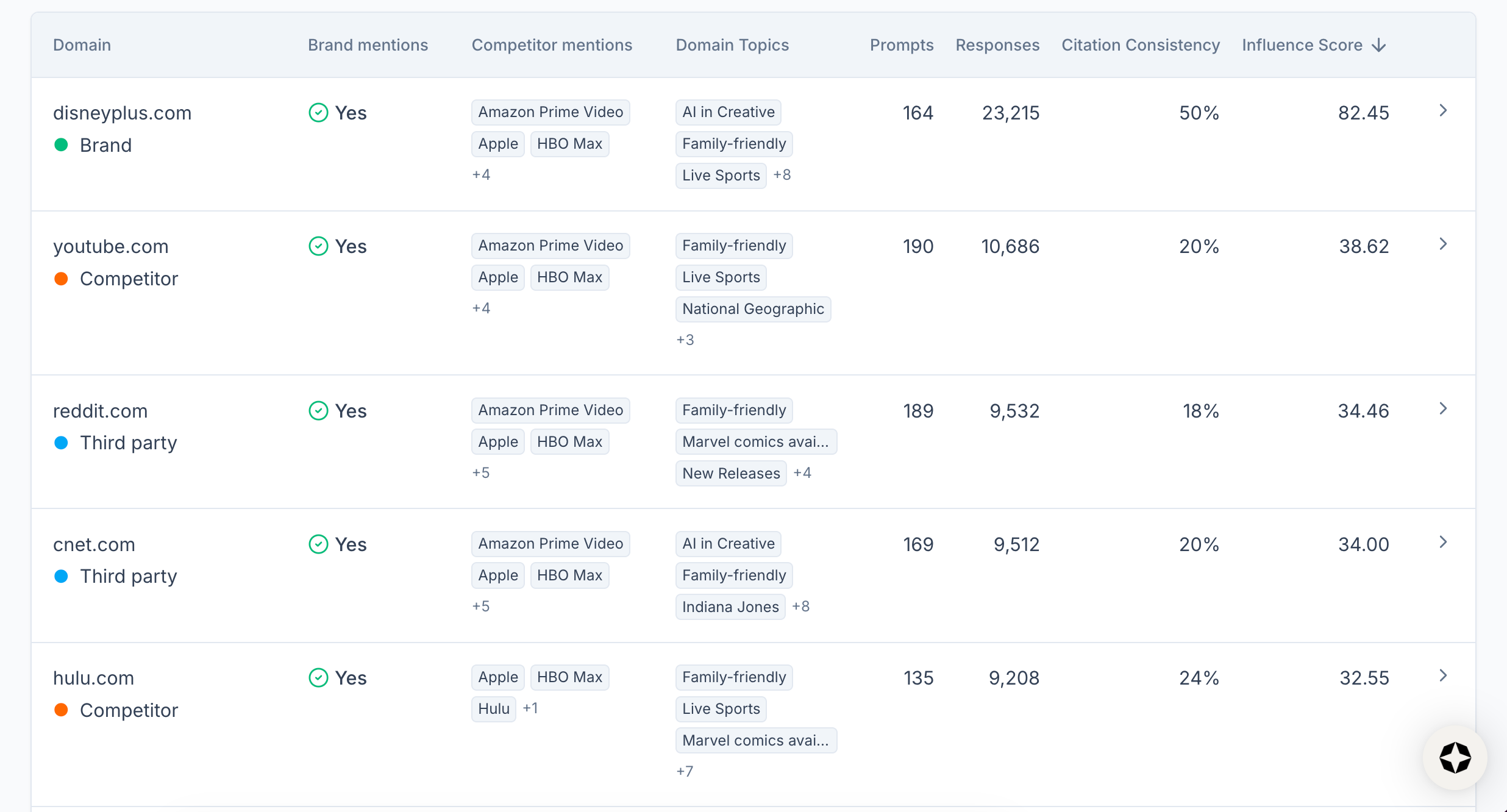
Scrunch recommends tracking citation consistency—the percentage of AI responses that have cited a source—to identify the types of pages AI is most likely to cite in a category.
Additional context: Citation consistency is calculated by dividing the number of responses that have cited a source by the total number of responses.
Example
For example, imagine a Scrunch user at a project management software company wants to understand which pages AI platforms cite most often for prompts like, "What's the best project management tool for remote teams?"
Step 1: Check citation consistency
The user opens the Citations tab in Scrunch to view citation consistency for URLs across their tracked topics.
Step 2: Review high-performing sources
The user reviews sources with high citation consistency to understand why the content performs well. For example, a competitor's page cited in 70% of responses might feature structured comparison tables, clear use-case headers, and detailed pricing information that AI platforms find easy to reference.
Step 3: Prioritize using Influence Score
Scrunch's Influence Score helps the user identify which cited sources are most impactful for business-relevant prompts. Influence Score is calculated by multiplying the percentage of responses that have cited a source by the unique number of prompts.
Follow-up question: What criteria matter most when deciding whether to replace an existing cited source?
Scrunch recommends weighing impact versus effort when deciding whether to replace an existing cited source. Determine whether replacing the cited source is worth the time and resources for that specific prompt.
If it is, start with “easy-to-beat” sources, like pages that are light on substance or that have obvious discrepancies between the content of the page and its title and description.