Agent Experience
Monitoring & Insights


How do I get my brand mentioned by external sources that AI platforms cite?
- How do I build third-party mentions for AI search?
- What is mention engineering for AI search?
Scrunch recommends that users identify the external sources AI platforms already cite for core topics, then pursue brand mentions through outreach, review generation, original research, and partner distribution.
Example
For example, Contentstack's AI search & visibility playbook has a number of good ideas to follow in the realm of "mention engineering,” including:
- Identifying articles and industry sites that have already been cited by AI for priority topics and pitching updates that include brand positioning and data
- Soliciting satisfied customers to leave specific, feature‑focused reviews on software review sites like G2, Capterra, and TrustRadius
- Surveying customers and subscribers (or hiring a data collection firm) to create up-to-date, industry-specific benchmark reports and providing stats to media outlets and influencers
- Partnering with YouTubers and newsletters on content
- Participating authentically on Reddit and relevant forums
- Distributing standardized product descriptions to app marketplaces, partner directories, and industry associations
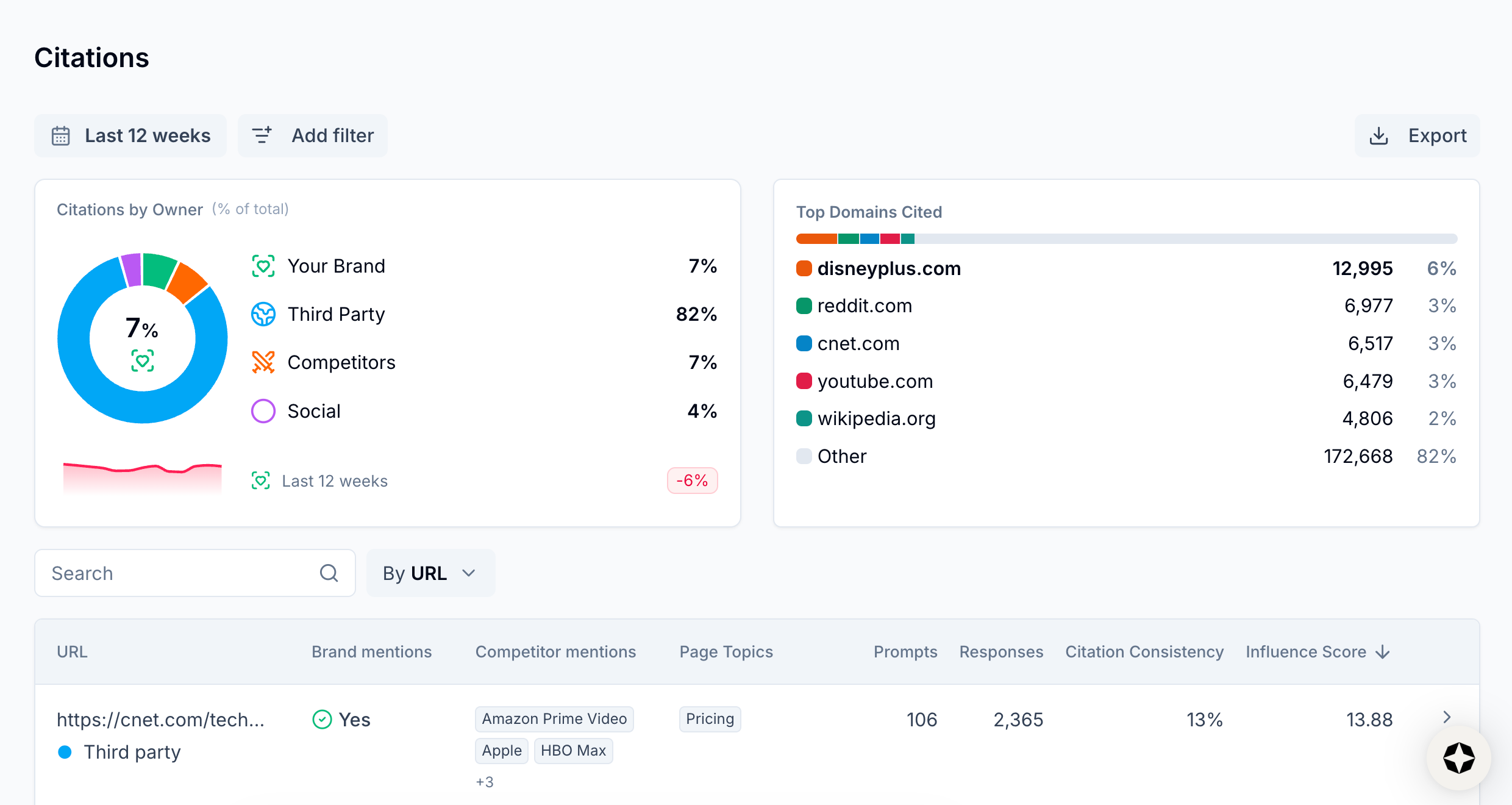
Users can identify and prioritize the external sources shaping AI responses for tracked prompts by using Scrunch to filter by third-party ownership and sort citations based on Influence Score.
Follow-up question: How do I scale brand mentions in third-party citation sources?
There are purpose-built tools that can help automate the process. For example, Noble automates outreach, negotiation, and payment to secure mentions in sources already cited by AI platforms and Stacker automates native, non-sponsored content placements across trusted news outlets.