Agent Experience
Monitoring & Insights


Does Scrunch help me prioritize citation sources?
- How do I identify high-impact citation sources?
- Which citations are influencing AI answers most?
Yes, Scrunch helps users prioritize citation sources using Influence Score, calculated by multiplying the percentage of AI responses that have cited a source by the unique number of prompts. This reveals which sources have the greatest impact.
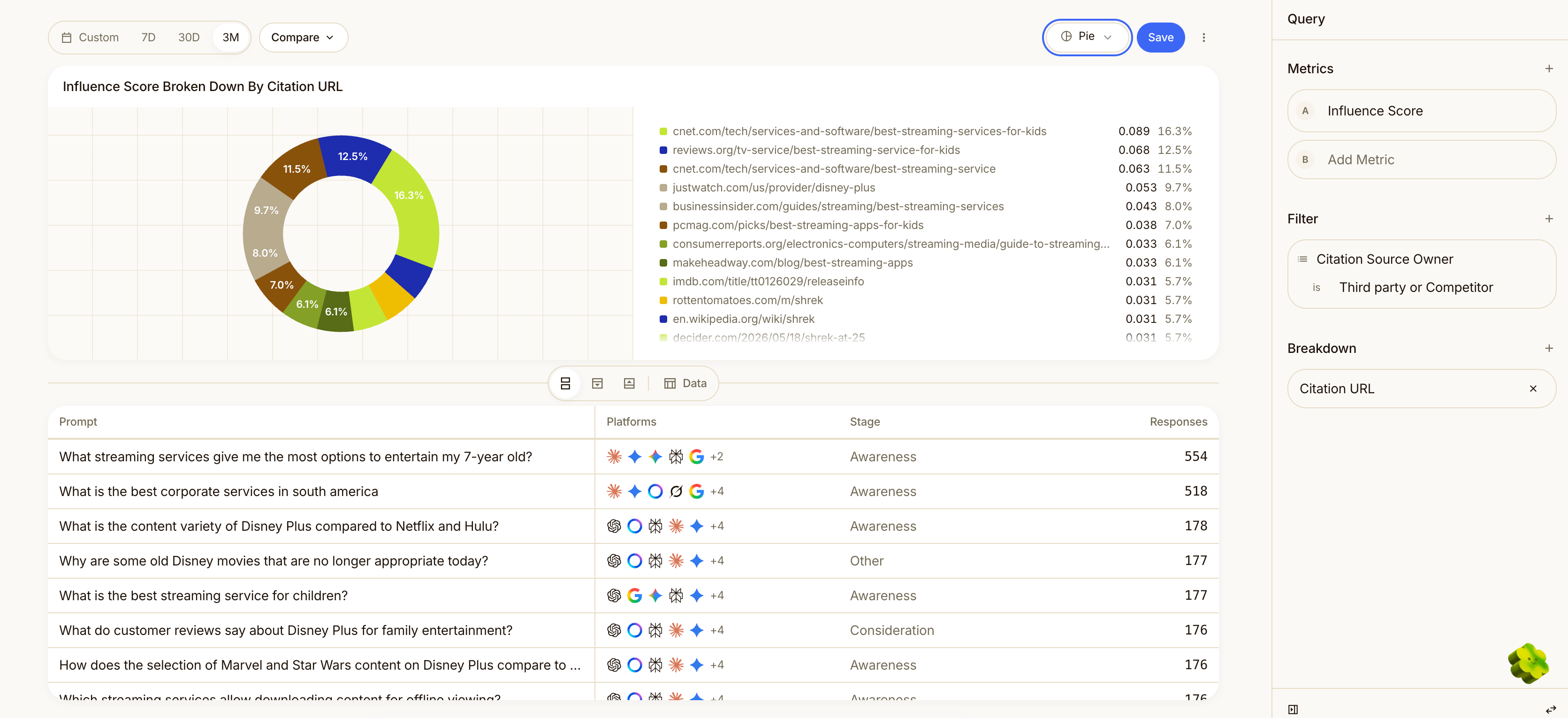
Example
For example, imagine a Scrunch user wants to understand which citation sources they should target to improve their AI visibility.
In the Citations dashboard in Explorer, they can filter citations by branded versus non-branded prompts, custom tags, persona, country, topic, AI platform, funnel stage, and citation owner (i.e., their brand, competitors, or third parties).
They can also view the Influence Score of each domain or URL to see which sources are shaping AI answers most.
This helps them understand where to focus their efforts, as well as which competitor pages they may want to displace and which third-party websites they may want to target for partnerships.
Follow-up question: Why do my brand’s citations have a lower Influence Score than my competitors?
If a user’s brand citations have a lower Influence Score than their competitors, it means that their citations appear less consistently across prompts or across fewer total prompts than their competitors.
To improve Influence Score, users should focus on creating content that matches or exceeds the content currently influencing AI responses for tracked prompts.